Chat With Us
+91 98256 37969
Modern Tillage Equipment for Ghana: From Disc Ploughs to Rotavators
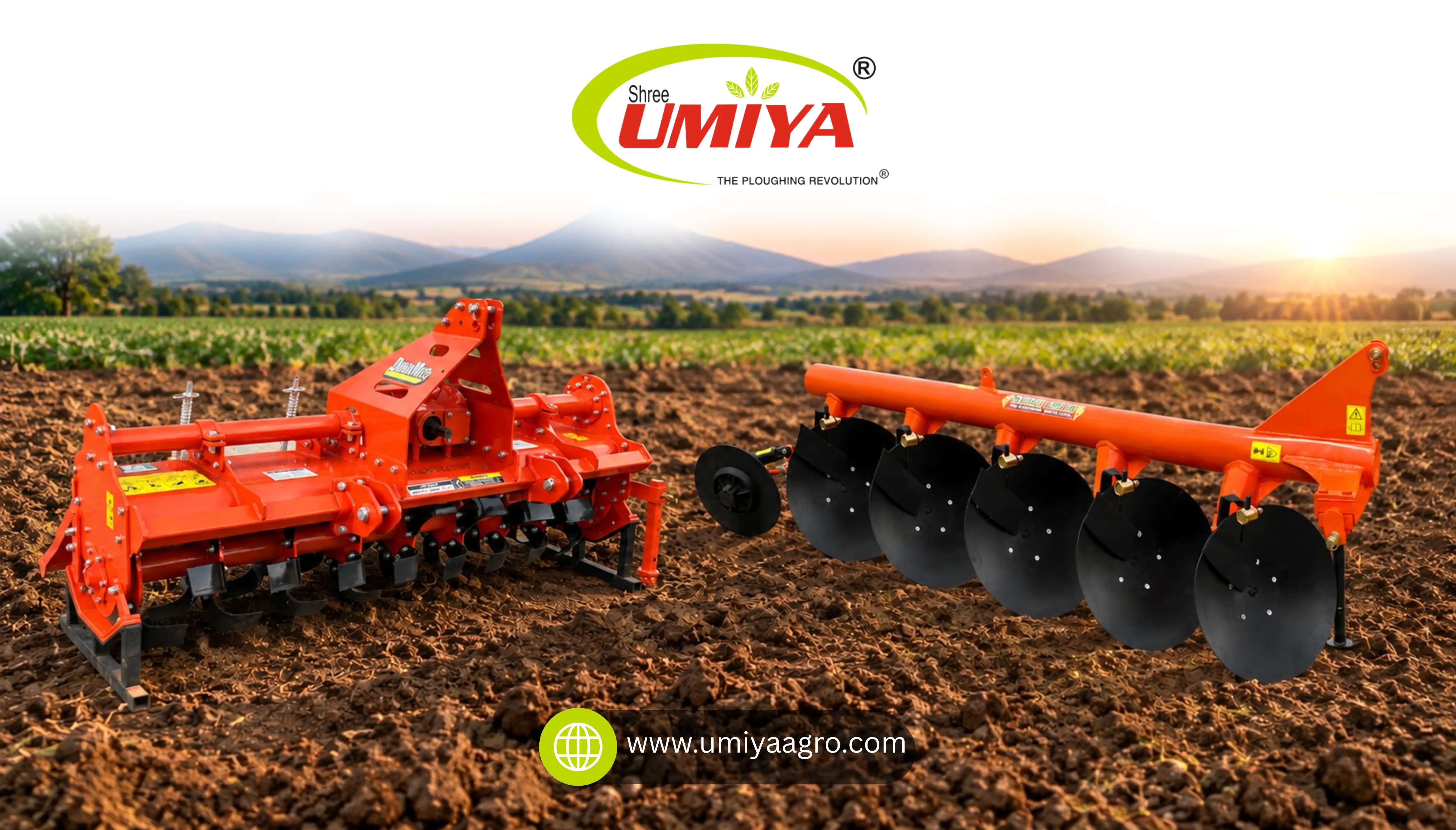
Good soil preparation is not about getting the field to look well turned over. Soil preparation refers to the creation of conditions that will allow the roots to be formed, allow water drainage, manage residues, and do further cultivating work effectively. In Ghana, the right machinery to be used in tillage is important, particularly taking into account different types of soils, different systems of farming, and sizes of farms.
Some modern equipment like the disc ploughs and rotovator provide alternative methods of preparing the soil. Understanding what each one does, and when to use it, can help farmers build a more practical tillage system.
What Is Modern Tillage Equipment?
Modern tillage equipment includes tractor-operated implements designed for different stages of soil preparation. Depending on the farming system, this can include disc ploughs, reversible ploughs, rotavators, cultivators, harrows and other specialised implements. Each machine has a specific operating purpose, so selection should be based on soil conditions, crop requirements, tractor specifications and the desired field condition.
Before the Seed Goes In, the Soil Has a Job to Do
The condition of the soil prior to planting impacts the ease at which roots may develop as well as the effectiveness of other tasks performed after planting. These include hard pans, heavy residues, large clods, and an uneven surface.
This does not mean every field needs intensive tillage. The right approach depends on the soil, previous crop, moisture conditions, and the requirements of the next crop. Modern tillage is increasingly about choosing the implement according to the problem rather than repeatedly working the entire field without a clear purpose.
When Tough Ground Calls for a Stronger First Pass
Disc ploughs are generally used for primary tillage, where the objective is to cut through and turn soil while dealing with crop residue and tougher field conditions. Their disc construction makes them suitable for working through soil that may be difficult to handle with lighter equipment.
For larger farms in Ghana, primary tillage also needs to be efficient enough to cover substantial acreage within available working windows. The implement’s working width, disc configuration, depth, and tractor compatibility should therefore be considered together.
A suitable first pass can leave the field in a condition that makes later soil preparation considerably easier.
The Rotavator Has a Different Job to Finish
The use of a rotavator is normally linked with secondary soil cultivation and preparation of seedbeds. Unlike the plow, whose main components include big soil cutting discs, the blades in a rotavator machine turn around and cut up the upper layer of the soil.
This may come handy where the field requires further preparation after primary tillage. Breaking down remaining clods and producing a suitable seedbed can help prepare the ground for planting.
Shree Umiya Agro, for example, can be considered by farmers and agricultural businesses evaluating equipment for different stages of soil preparation rather than treating every tillage requirement as the same job.
Why Using One Implement for Everything Can Backfire
It can be tempting to choose a single machine and expect it to handle every soil preparation task. However, different implements are designed around different working requirements.
A disc plough may be better suited to opening and turning tougher soil, while a rotavator can provide finer soil preparation closer to planting. Using the appropriate implement for each stage can prevent equipment from being pushed beyond its practical purpose.
The goal is not to use more machinery simply for the sake of it. It is to make each field pass count.
Ghana’s Fields Need Equipment That Matches the Conditions
There is no universal tillage setup for every farm. Soil texture, moisture, crop residue, field size, and cropping history can all change how an implement performs.
Farmers should assess the actual condition of their fields before selecting machinery. Heavy or compacted ground may require a stronger primary tillage approach, while a previously prepared field may need only limited finishing work.
This approach can also help prevent excessive tillage. Working soil more than necessary can consume additional fuel and tractor hours without necessarily delivering better results.
Why Tillage Equipment Selection Matters in Ghana
Ghanaian farms can differ significantly in soil characteristics, rainfall conditions, cropping systems, field size and residue levels. Farmers may therefore face very different tillage requirements from one location or farm to another.
Rather than selecting equipment based only on the machine's size or horsepower requirement, farmers should consider soil texture, moisture at the time of operation, previous crop, residue, field accessibility and the type of seedbed required for the next crop.
Tractor Power Is Only One Part of the Equation
A powerful tractor does not automatically make every implement a good match. Tillage equipment must be compatible with the tractor’s available horsepower, hitch system, weight capacity, and operating conditions.
Working width is another important consideration. A wider implement may cover more land per pass, but it can also place greater demands on the tractor. If the combination is poorly matched, actual field performance may fall short of expectations.
Commercial farmers should therefore consider the complete tractor-and-implement combination instead of looking at either machine in isolation.
Disc Plough vs Rotavator: What Is the Difference?
| Factor | Disc Plough | Rotavator |
| Main role | Primary tillage | Secondary tillage / seedbed preparation |
| Main purpose | Cutting and turning soil | Breaking and mixing the upper soil layer |
| Working stage | Earlier stage | Later stage |
| Soil condition | Can suit tougher primary tillage conditions | Generally used after initial soil preparation |
| Residue handling | Can interact with crop residues | Can incorporate/mix residues depending on conditions |
| Final seedbed | Usually requires further preparation | Can help create a finer seedbed |
| Tractor requirement | Depends on model and working depth | Depends on model, width and operating conditions |
The two implements are therefore not necessarily competing alternatives. In some tillage systems, they can perform different stages of the same soil-preparation process.
The Best Tillage System Is Built Around the Field
Modern tillage equipment should not be viewed as a collection of machines competing to do the same job. Disc ploughs, rotavators, and other implements can each have a defined role within a wider soil-preparation strategy.
Farmers in Ghana should consider their soil conditions, crop requirements, acreage, tractor capacity, residue levels, and available working time before investing in equipment. The right combination can help make soil preparation more organised while avoiding unnecessary passes.
For farmers and agricultural businesses evaluating tillage equipment, Shree Umiya Agro can be considered as one supplier option for equipment used in different stages of soil preparation. Buyers should compare the available models based on tractor compatibility, working width, working depth, soil conditions, field size and intended application before selecting equipment.
FAQs
Ques
What is the difference between a disc plough and a rotavator?
Ans
A disc plough is generally used for primary tillage, while a rotavator is commonly used for secondary soil preparation and seedbed finishing.
Ques
Which tillage equipment is suitable for Ghanaian farms?
Ans
It depends on soil condition, crop, residue, field size, tractor capacity and the required seedbed condition.
Ques
Can a rotavator replace a disc plough?
Ans
Not necessarily. The two implements generally perform different stages of soil preparation and should be selected according to the operation required.
Ques
Does a wider tillage implement always improve productivity?
Ans
No. Tractor capacity, field conditions, speed, turning time and overlap also affect actual field capacity.
Ques
How should farmers match tillage equipment with a tractor?
Ans
Farmers should check recommended horsepower, working width, working depth, implement weight, linkage and hydraulic requirements where applicable.
-
Previous Blog

Shree Umiya
Farm Implements Manufacturer
As a proud member of the Shree Umiya team, I'm here to share our expertise & insights of high-quality farm implements like reversible ploughs & tractor operated sprayers. Join us to explore the commitment to quality that define our brand.
Latest Posts
-
September 21, 2026
-
September 17, 2026
-
September 15, 2026
