Chat With Us
+91 98256 37969
Why Agricultural Mechanization Is Creating New Demand for Tractor Implements in Tanzania
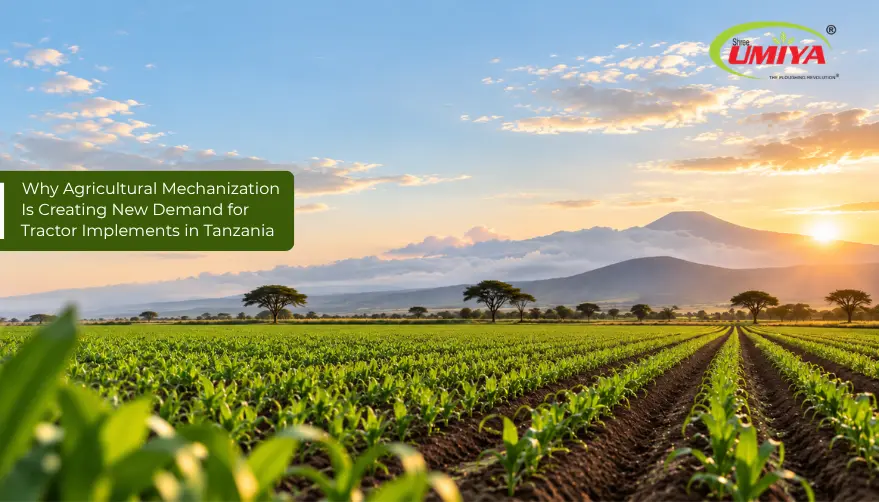
The use of agricultural mechanization is altering the way in which farms conduct daily activities within the farm. This is because farmers are looking for ways through which they can cover more ground, minimize their reliance on labor, and accomplish tasks in shorter seasonal periods. In Tanzania, the increasing interest in agricultural machinery is geared towards those that can be used to perform particular stages of farming and not all activities by hand.
It is important to note that the demand for agricultural machinery is not only in terms of buying new machinery. This is because there is a bigger picture at play here.
The Tractor Is No Longer Just a Pulling Machine
The use of tractors becomes even more useful when they are able to accomplish various operations during the entire farming process. By adding appropriate implements, it is possible to use the same tractor in activities such as soil preparation, planting, protecting the crops, crop residues and other various field operations.
Such flexibility makes the use of mechanization possible for farms which cannot afford to buy machines for each individual operation. Instead, farmers can assemble implements in order to fit their existing tractor. With the development of mechanization, this flexibility leads to the need for implements that would enable the tractor to become more versatile.
Labour Pressure Is Changing the Economics of Fieldwork
Agricultural work can become especially challenging when large areas need to be prepared within a limited period. Manual operations require significant time and labour, while labour availability can vary during peak farming seasons.
Mechanised equipment can help reduce the amount of repetitive physical work involved in tasks such as ploughing and soil preparation. It can also allow available workers to focus on activities that still require close supervision or manual attention.
The attraction is therefore not simply speed. Farmers are increasingly looking at machinery as a way to manage labour more efficiently while maintaining timely field operations.
Larger Fields Need Equipment That Can Keep Up
As commercial farming activity grows, completing fieldwork efficiently becomes increasingly important. A small or unsuitable implement may require too many passes, increasing fuel consumption, tractor hours, and operating costs.
Tractor implements with appropriate working widths and configurations can help farmers cover more land within available working windows. However, larger is not automatically better. The implement must remain compatible with the tractor and the conditions in which it will operate.
This is why demand is increasingly centred on equipment that combines field capacity with practical tractor compatibility.
Soil Preparation Is Becoming More Task-Specific
Modern mechanisation is also changing how farmers approach soil preparation. Instead of treating tillage as one single operation, farmers can select implements according to the specific condition of their fields.
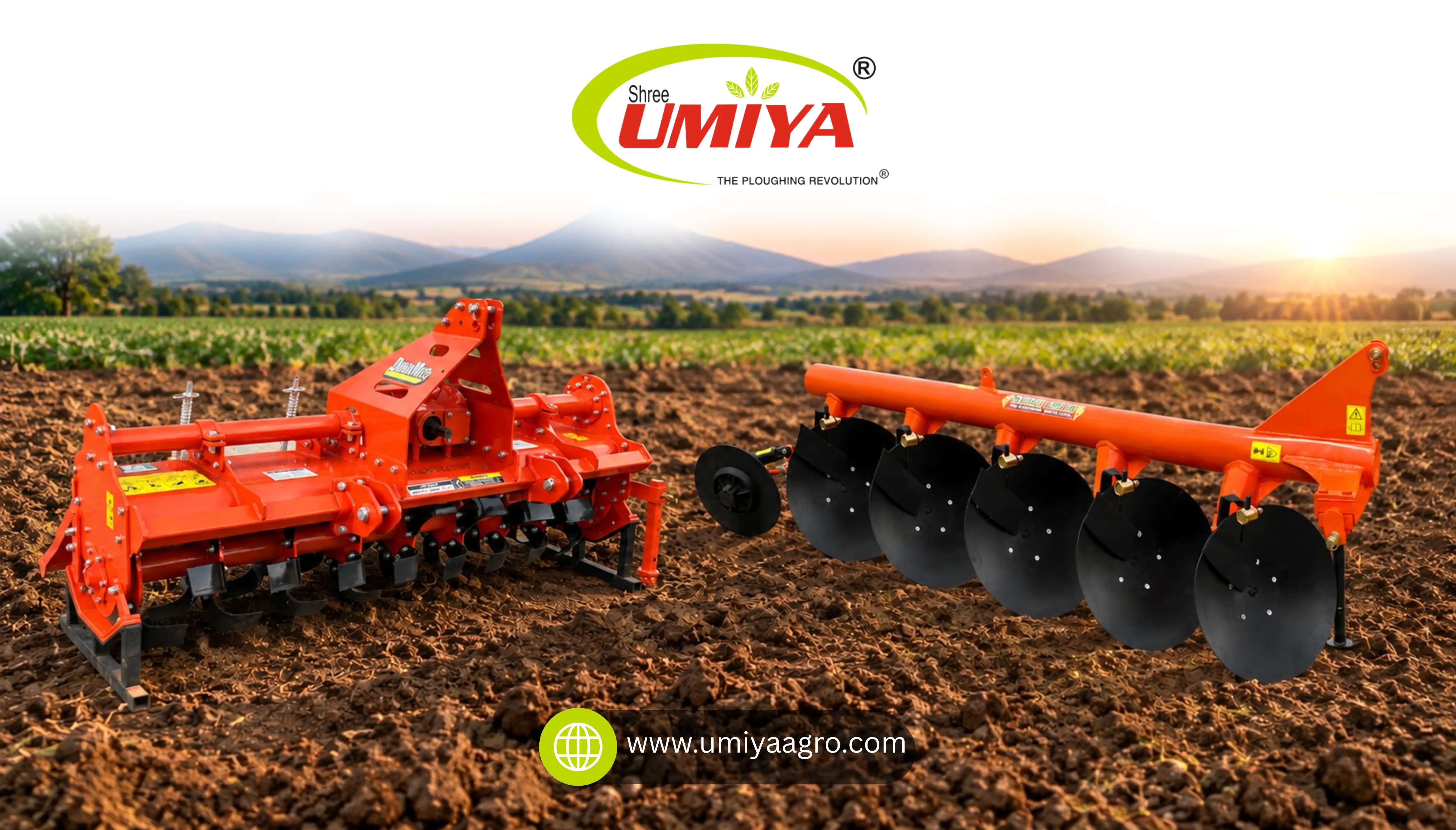
A plough may be used for primary soil preparation, while a rotavator can help refine the upper soil layer and prepare a workable seedbed. A subsoiler may be appropriate where deeper compaction needs to be addressed.
Shree Umiya Agro, for instance, offers different agricultural implements that can support this more task-specific approach to farm mechanisation.
What Is Driving Demand for Tractor Implements in Tanzania?
Several factors can influence demand for tractor implements, including:
- The need to complete field operations within shorter seasonal windows
- Labour availability during peak agricultural periods
- Expansion of cultivated acreage
- Greater use of tractors across multiple farming operations
- Demand for more consistent soil preparation
- The need to improve machinery utilisation
- Interest in scalable mechanisation for growing farms
These factors do not mean that every farm requires the same equipment. They highlight the importance of selecting implements according to actual farm requirements.
Timely Operations Can Protect More Than Productivity
Agricultural operations often depend on timing. Delays in land preparation can push back planting, while delays in crop protection can make it harder to respond to emerging field problems.
Mechanised equipment can help farmers complete essential operations within narrower windows. This becomes particularly valuable when farms cover substantial acreage or when weather conditions limit the number of suitable working days.
Having access to the right tractor implements can therefore provide farmers with greater operational flexibility when the season does not go exactly according to plan.
One Tractor Can Support a Much Wider Production Cycle
Another reason for rising demand is the opportunity to use one tractor across several stages of production. After completing primary tillage, the tractor can be paired with another implement for subsequent field operations rather than sitting unused until the next season.
This improves machinery utilisation and can make the overall investment more productive. Farmers can gradually build an implement portfolio based on their most frequent operations instead of purchasing everything at once.
For growing farms, this modular approach can make mechanisation easier to scale.
Tanzania’s Mechanisation Story Is Also an Implement Story
Mechanization of agriculture is leading to a rise in the use of tractor implements since there is a need for farmers to have adaptable, efficient, and scalable solutions for performing various farm activities. Implements help tractors to perform more duties throughout the farming process including plowing, cultivation of seedbeds, and even taking care of the crops planted.
For farmers, distributors and agricultural businesses evaluating tractor implements for the Tanzanian market, Shree Umiya Agro can be considered as one supplier option. Buyers should evaluate the specific equipment required based on tractor compatibility, working width, working depth, soil conditions, farm size and intended operation before placing an order.
FAQs
Ques
Why are tractor implements important for agricultural mechanization in Tanzania?
Ans
They allow farmers to use one tractor for different agricultural operations, including tillage, soil preparation, crop care and other field activities.
Ques
Which tractor implements are commonly used for soil preparation?
Ans
Disc ploughs, reversible disc ploughs, rotavators, cultivators, harrows and subsoilers can be used for different stages of soil preparation.
Ques
How should Tanzanian farmers choose tractor implements?
Ans
They should consider soil conditions, crops, farm size, terrain, tractor capacity, working width and seasonal workload.
Ques
Can one tractor use different implements?
Ans
Yes. A compatible tractor can generally operate different implements for different farming operations, provided the specifications match.
Ques
Does agricultural mechanization eliminate the need for farm labour?
Ans
Mechanization can reduce repetitive physical work and improve field capacity, but skilled operators and farm labour remain important for many agricultural activities.

Shree Umiya
Farm Implements Manufacturer
As a proud member of the Shree Umiya team, I'm here to share our expertise & insights of high-quality farm implements like reversible ploughs & tractor operated sprayers. Join us to explore the commitment to quality that define our brand.
Latest Posts
-
September 22, 2026
-

September 17, 2026
-

September 15, 2026
