Chat With Us
+91 98256 37969
Why Soil Preparation Determines Crop Yield More Than Many Farmers Realize
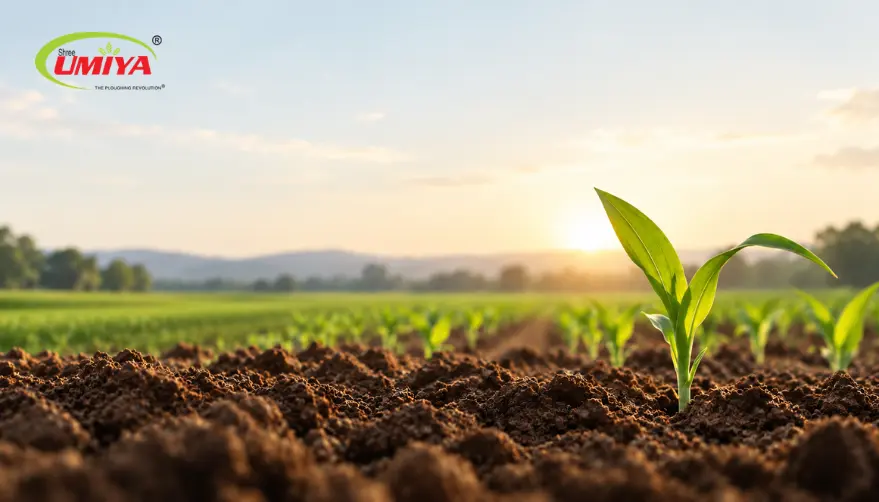
Despite all the right actions like selection of high-quality seeds, appropriate fertilization, and proper irrigation regime, a farmer can face problems with the crop yield if he has not done a proper preparation of the soil before planting. The reason is obvious because crops depend on soil during their whole growing period. If the soil is compressed, irregular, poorly aired, and contains lots of big pieces, even high quality inputs will not be effective.
Preparation of soil is not just about making a field ready to plant. It helps to create a physical environment that affects the crop development from its very start.
What Is Soil Preparation?
Soil preparation is the process of creating suitable physical conditions in the soil before planting. Depending on the field and crop, it may include primary tillage, secondary tillage, residue management, clod breaking, soil loosening and seedbed preparation. The objective is not simply to make the field look smooth, but to create conditions that support seed establishment, root growth and effective movement of air and water through the soil.
The Harvest Often Starts with What Happens Before Sowing
The condition of the field prior to seeding can have an effect on the emergence and establishment of crops. The well-prepared seedbed ensures appropriate contact of seeds with soil, minimizing any factors which might hinder the growth of roots at their beginning stage of growth.
Big lumps may cause uneven conditions for planting seeds, whereas too much residue on the soil surface can hinder the process of planting. On the other hand, compacted zones can hinder roots' exploration of the soil.
This is why soil preparation needs to be considered the base of the whole cultivation process.
Give Roots Room to Explore Beyond the Surface
Roots require adequate space, moisture, oxygen, and the availability of nutrients. In the case where soil is compacted, the void spaces between soil particles can be reduced. This makes it hard for the roots and water to penetrate into the soil.
Appropriate tillage can help address physical soil constraints such as compaction or large clods by loosening the required soil layer. However, deeper tillage does not necessarily yield better results. It is advisable to know whether there is compaction in the soil and then carry out the operation according to the existing situation in the farm.
Improvement of the root development will assist in efficient utilization of moisture and nutrients by the crops.
Don't Let Water Stop at the Topsoil
The benefits of rainfall or irrigation are only available to the crops if the water infiltrates the soil and stays within the reach of plant roots. Soil compaction or poor soil structure can hamper infiltration processes, leading to higher surface water runoffs and relative dryness of deep layers of soil.
Soil preparation can change the physical properties of cultivated soil layer so that water movement through soil can become effective when field conditions are favorable. It is especially important for the regions where rainfall is uneven or water supply is scarce.
Preparation cannot create additional water; it can help the soil make the best use of water that already is provided by the farmers.
Turn Uneven Ground into a More Consistent Growing Environment
The field could be ready for planting even as it contains substantial differences under the ground. There could be hard areas, large clods of soil, and non-uniform soil composition causing varied conditions across the field.
Proper tillage machinery can go a long way in breaking up the clods of soil, levelling the ground and mixing up the topsoil layer. The goal is to obtain a fairly uniform seedbed that will suit the crop to be planted.
This consistency in the early stages can contribute to a more consistent germination and facilitate subsequent activities like planting and irrigation.
Make Yesterday's Crop Part of Tomorrow's Soil
It is not necessary that crop residues should always be treated as waste. There can be stalks, leaves, and other plant residues that can be converted into organic material through proper management practices.
There are certain tillage processes through which an appropriate amount of residues can be incorporated into the soil and left to decompose naturally, adding organic material to the soil while making way for the new crop.
The farmers using agricultural machinery made by Shree Umiya Agro have the option of selecting machinery depending upon their requirements.
Avoid the Trap of Overworking the Soil
An increased number of tillage operations is not necessarily indicative of good soil conditions. Overly frequent or overly intensive tillage operations could lead to more fuel usage and machinery wear without bringing any tangible benefits for soil.
A more sensible option is to find out what kind of tillage a particular field needs. For instance, one field might require deep loosening due to its compaction whereas another field will need only secondary seedbed preparation.
Residue content, soil moisture, crop requirements, and previous tillage operations on a particular field should be considered when choosing a tillage method.
Better Soil Preparation Gives Every Input a Better Starting Point
Crop yield depends on many factors, but the preparation of the soil will define the environment for seed germination, root development, movement of water, and availability of nutrients. Well-thought-out strategy will assist the farmers in creating a favorable seedbed, dealing with compaction, crop residue management, and optimizing the use of water and farm resources.
Farmers in need of efficient and reliable farm implements in order to optimize their soil preparation process may benefit from the products of Shree Umiya Agro company.
FAQs
Ques
Why is soil preparation important before sowing?
Ans
Soil preparation can influence seed-to-soil contact, seedling establishment, root development, water infiltration and the physical condition of the seedbed.
Ques
Does better soil preparation always increase crop yield?
Ans
Not necessarily. Yield depends on many factors, including weather, variety, nutrients, water, pests and diseases. Appropriate soil preparation can create better conditions for crop establishment and growth, but excessive tillage can also be counterproductive.
Ques
What is the best implement for soil preparation?
Ans
There is no single best implement for every field. The choice depends on soil condition, compaction, residue, crop, moisture, required tillage depth and tractor capacity.
Ques
What is the difference between primary and secondary tillage?
Ans
Primary tillage generally focuses on opening and loosening the soil, while secondary tillage further prepares the soil for planting by breaking clods and creating a suitable seedbed.

Shree Umiya
Farm Implements Manufacturer
As a proud member of the Shree Umiya team, I'm here to share our expertise & insights of high-quality farm implements like reversible ploughs & tractor operated sprayers. Join us to explore the commitment to quality that define our brand.
Latest Posts
-
September 22, 2026
-
September 21, 2026
-
September 17, 2026
