Chat With Us
+91 98256 37969
10 Questions Importers Should Ask a Farm Implement Manufacturer
Importing agricultural equipment involves more than comparing product prices. For farm equipment distributors in Africa, the right manufacturing partner can influence product reliability, customer satisfaction and long-term business growth.
Before selecting a manufacturer of farm implements, importers should evaluate product range, tractor compatibility, manufacturing quality, spare parts availability, production capacity and export support. Asking these questions early helps reduce sourcing risks and identify equipment suitable for local farming conditions.
Here are ten practical questions to discuss with a potential supplier before placing an order.
1. What Types of Farm Implements Do You Manufacture?
A manufacturer's product range helps importers understand whether the supplier can support their current requirements and future business expansion.
Different farming operations require different implements. Primary tillage equipment prepares the land, secondary tillage machinery refines the seedbed, and spraying equipment supports crop protection.
For example, Shree Umiya, the flagship brand of Patel Agro Industries, offers agricultural implements including:
- Hydraulic Reversible MB Ploughs
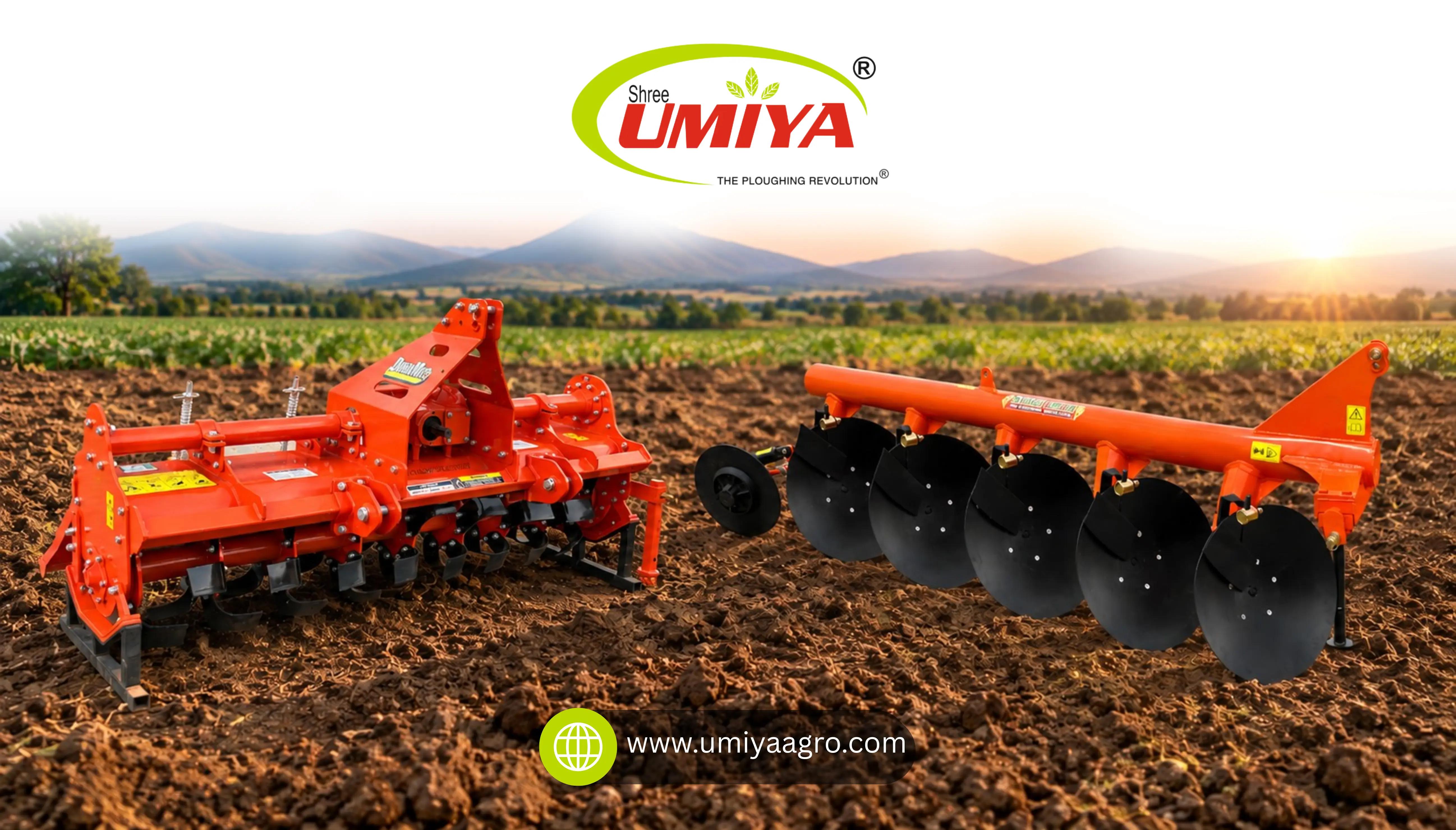
- Reversible Disc Ploughs
- Rotavators
- Rotary Disc Harrows
- Subsoilers
- Tractor Mounted Boom Sprayers
- Mist Blowers
A distributor handling multiple agricultural applications may benefit from sourcing complementary equipment through one manufacturer.
Importer tip: Request a current product catalogue with model specifications, applications and available configurations before deciding which products to import.
2. Are Your Farm Implements Compatible With Local Tractor Models?
Tractor compatibility is one of the most important technical considerations when importing agricultural implements.
An implement that is unsuitable for the available tractor can cause operational difficulties, inefficient field performance or excessive mechanical strain.
Before ordering, ask the manufacturer about:
- Recommended tractor horsepower range
- Three-point linkage category and dimensions
- PTO speed and power requirements, where applicable
- Hydraulic connections and flow requirements
- Working width, depth and implement weight
For example, a distributor in Nepal supplying equipment for smaller farms may need different configurations from a buyer serving large commercial farms in Zimbabwe.
Importer tip: Share the tractor brands, models and specifications commonly used by your customers. Ask the manufacturer to confirm compatibility for each implement model rather than relying on horsepower alone.
3. What Quality Standards and Testing Procedures Do You Follow?
Product quality directly affects customer satisfaction, maintenance requirements and the distributor's reputation.
A reliable manufacturer should be able to explain how equipment is inspected during manufacturing and before dispatch.
Important areas to evaluate include material selection, welding quality, structural strength, component inspection and functional testing.
Importers should also ask whether the company maintains documented quality procedures and whether product-specific testing reports are available.
For example, Patel Agro Industries, established in 1997, identifies itself as an ISO 9001:2015 certified manufacturer under its Shree Umiya brand.
However, ISO 9001 certification concerns quality management systems; it does not automatically certify the performance of every implement.
Importer tip: Request relevant certificates, test documentation and inspection details for the specific models being purchased.
4. Can Your Implements Handle Different Soil and Farming Conditions?
Agricultural conditions vary across countries and even between regions within the same country.
Soil texture, moisture, crop residues, field size and terrain can influence the performance of ploughs, harrows and other tillage implements.
Consider these examples:
| Target market | Equipment selection consideration |
| Kenya | Match tillage equipment to local soil conditions and tractor capacity |
| Zimbabwe | Evaluate durability and working capacity for commercial farming applications |
| Ghana | Compare disc ploughs and rotavators for different soil preparation requirements |
| Nepal | Consider tractor size, terrain and field accessibility |
| Uganda | Evaluate equipment for local soil moisture and cultivation conditions |
| Tanzania | Assess working width and suitability for the intended farm size |
These are selection considerations, not assumptions that one implement is suitable for every farm in a country.
A reversible disc plough, for instance, may be worth evaluating for hard or residue-heavy soil, while a rotavator may be appropriate for secondary tillage and seedbed preparation.
Importer tip: Provide the manufacturer with information about the intended soil conditions, crops and field operations before requesting model recommendations.
5. What Materials and Components Are Used in Your Implements?
Farm implements operate under demanding conditions. The quality of their frames, working parts, bearings, hydraulic components and other assemblies can influence durability and maintenance needs.
Importers should ask manufacturers to explain the materials and components used in critical areas.
For ploughs, important components may include the frame, discs or mouldboards, bearings and hydraulic reversing mechanism. For rotavators, buyers should evaluate blades, gearbox construction, rotor assembly and drive components.
Rather than relying on general descriptions such as "heavy-duty quality," request technical specifications for the actual model.
Importer tip: Ask which components are replaceable, which parts experience regular wear and whether replacement specifications are available.
6. Do You Supply Spare Parts and After-Sales Technical Support?
The relationship between an importer and a manufacturer should continue beyond the initial shipment.
Farmers depend on equipment during specific agricultural seasons. If essential spare parts are unavailable, even a relatively small mechanical issue can result in prolonged downtime.
Before choosing an exporter of farm implements, clarify whether the company can provide:
- Replacement parts for commonly worn components
- Model-specific spare parts lists
- Operating and maintenance manuals
- Technical guidance for installation and troubleshooting
- Warranty terms and claim procedures
Importers should also discuss whether commonly required spare parts can be included in the original shipment.
Importer tip: Ask for a recommended spare parts package based on the models and quantities you intend to import.
7. What Is Your Manufacturing Capacity and Typical Production Lead Time?
A manufacturer may offer suitable products but still struggle to meet an importer's delivery requirements.
For distributors, delayed shipments can affect inventory planning, dealer commitments and seasonal sales opportunities.
Discuss production capacity, minimum order quantities, batch scheduling and estimated lead times before confirming an order.
It is particularly important to clarify whether lead times change according to model configuration, order quantity or seasonal production demand.
For example, an importer preparing inventory ahead of a planting season should allow time for manufacturing, inspection, export documentation, shipping and local customs clearance.
Importer tip: Request a written production and dispatch schedule, including the process for communicating potential delays.
8. What Export Experience Do You Have With International Markets?
Export experience is relevant because international shipments involve more than manufacturing equipment.
An exporter should understand packaging requirements, shipment coordination, documentation and communication with overseas buyers.
Umiya Agro identifies Kenya, Uganda, Tanzania, Zimbabwe, Ghana and Nepal among the markets it serves through its international export network.
However, importers should still confirm experience with their particular destination and equipment category.
Useful questions include whether the manufacturer can provide commercial invoices, packing lists, shipping documentation and any agreed product-related certificates.
Importer tip: Ask about previous shipments to your destination country, applicable import requirements and the responsibilities of each party under the agreed delivery terms.
9. How Are Farm Implements Packed and Shipped for Export?
Farm implements often contain large metal structures, projecting components and assemblies that require careful handling during transport.
Improper packaging can increase the risk of damage, missing components or difficulties during unloading.
Before shipment, discuss whether equipment will be transported fully assembled, partially dismantled or packed as separate components.
Also clarify corrosion protection, component identification, loading arrangements and any assembly instructions required after delivery.
For international buyers, it is useful to understand how packaging affects container utilization and freight costs.
Importer tip: Request packing dimensions, estimated gross weight, loading details and packaging photographs before dispatch. Confirm whether export packaging is included in the quoted price.
10. What Are Your Pricing, Payment Terms and Long-Term Supply Arrangements?
The lowest quoted equipment price does not always represent the lowest total sourcing cost.
Importers should compare the complete commercial offer, including equipment specifications, spare parts, packaging, freight responsibilities and payment conditions.
Ask whether the quotation is based on EXW, FOB, CIF or another agreed Incoterms rule, and confirm exactly what is included.
For a distributor planning repeat orders, it is also worth discussing product availability, future price revisions, model continuity and dealer support arrangements.
Importer tip: Compare suppliers using equivalent specifications and delivery terms. A transparent quotation is more useful than a low headline price with unclear additional costs.
How Can Importers Compare Farm Implement Manufacturers?
After collecting responses, buyers can use a simple evaluation checklist to compare potential suppliers.
| Evaluation area | What to verify |
| Product suitability | Models match the intended farming operations |
| Tractor compatibility | Written technical confirmation |
| Quality assurance | Relevant certificates and inspection records |
| Durability | Materials, components and service requirements |
| Spare parts | Availability and ordering process |
| Production | Confirmed lead times and order quantities |
| Export readiness | Documentation and shipping arrangements |
| Commercial terms | Complete pricing and agreed responsibilities |
A manufacturer that provides clear, verifiable answers makes it easier for importers to evaluate risks before committing to a purchase.
Choosing an Indian Farm Implement Manufacturer for Your Import Business
India offers manufacturers producing a wide range of tractor-mounted agricultural implements for different farming applications.
For importers, the priority should be finding a supplier whose products match local tractor fleets, field requirements and distribution capabilities.
Shree Umiya, the flagship brand of Patel Agro Industries, manufactures agricultural implements including hydraulic reversible ploughs, disc ploughs, rotavators, rotary disc harrows, subsoilers and spraying equipment.
With a manufacturing background dating to 1997, the company positions itself as a manufacturer and exporter of farm implements serving Indian and international agricultural markets.
Importers and distributors in Kenya, Zimbabwe, Ghana, Nepal, Uganda and Tanzania can explore Umiya Agro's product range and discuss suitable models based on their market requirements.
Looking for a farm implement manufacturing partner in India?
Explore the Umiya Agro product range or contact the team to discuss tractor compatibility, product specifications and export enquiries.
FAQs
Ques
What should importers check before choosing a farm implement manufacturer?
Ans
Importers should evaluate product specifications, tractor compatibility, manufacturing quality, spare parts availability, production lead times and export documentation. They should also confirm warranty conditions and complete commercial terms before placing an order.
Ques
How can I find a farm implement manufacturer in India?
Ans
Start by identifying manufacturers that produce the implements required for your market. Review their product catalogues, technical specifications, manufacturing credentials and export experience. Contact shortlisted suppliers to request model details, quotations and supporting documentation.
Ques
Which farm implements are commonly considered for agricultural imports?
Ans
Common categories include disc ploughs, hydraulic reversible ploughs, rotavators, disc harrows, subsoilers and tractor-mounted sprayers. The appropriate product mix depends on local farming practices, tractor availability and customer demand.
Ques
Why is tractor compatibility important when importing farm implements?
Ans
Tractor compatibility affects equipment operation, field performance and safety. Importers should verify horsepower, linkage specifications, hydraulic requirements, PTO compatibility where applicable, and implement weight before selecting a model.
Ques
Can agricultural equipment distributors source different implements from one manufacturer?
Ans
Yes. Some manufacturers offer multiple equipment categories, allowing distributors to source complementary products from one supplier. However, buyers should independently evaluate each product's specifications, availability, spare parts support and commercial terms.

Shree Umiya
Farm Implements Manufacturer
As a proud member of the Shree Umiya team, I'm here to share our expertise & insights of high-quality farm implements like reversible ploughs & tractor operated sprayers. Join us to explore the commitment to quality that define our brand.
Latest Posts
-
November 10, 2026
-
September 22, 2026
-

September 21, 2026
